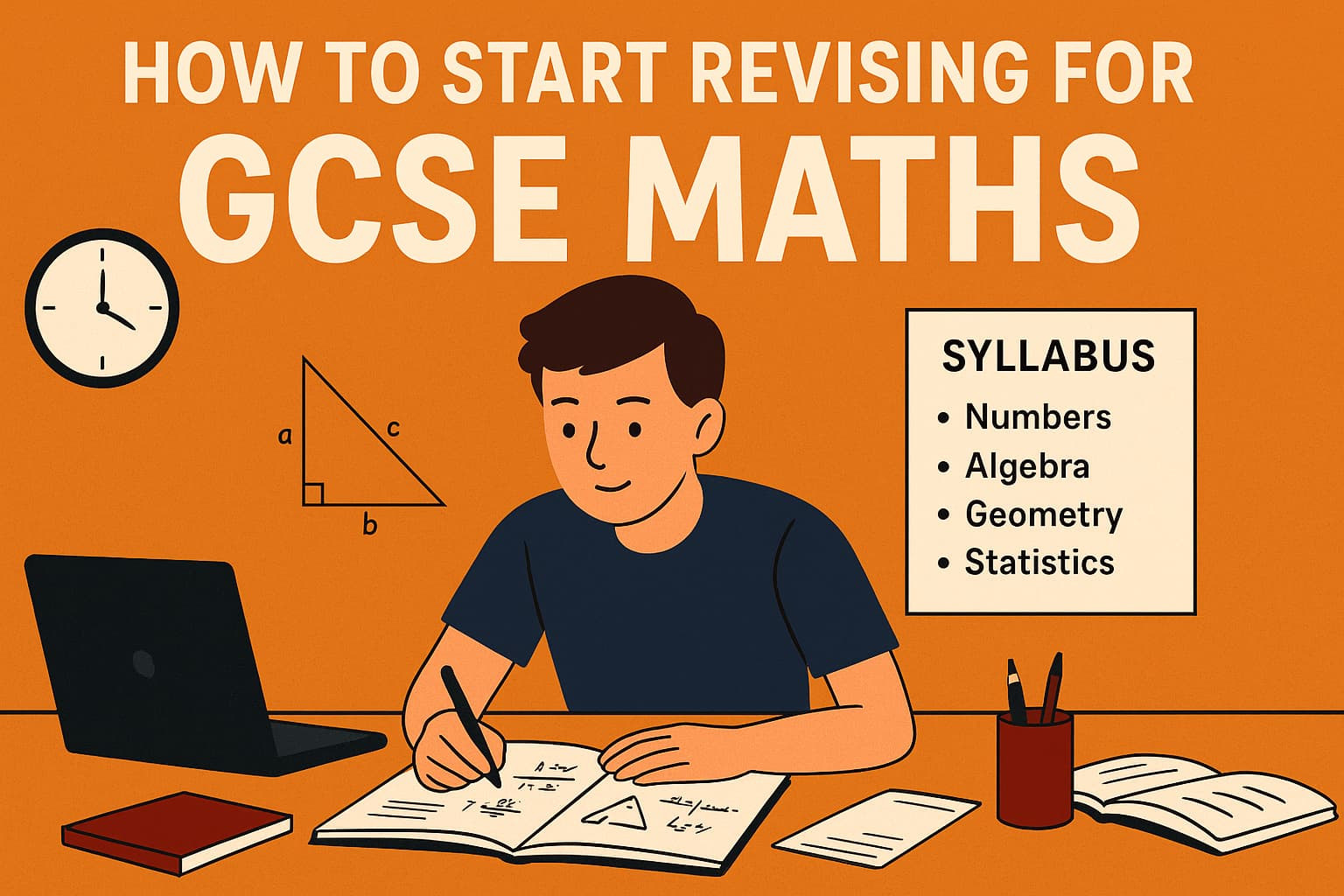
It can feel like too much to get ready for GCSE Maths when you have to study algebra, geometry, statistics, and problem-solving questions all at once. I've been a tutor for a long time, and I can tell you that a lot of students have trouble not because the material is too hard, but because they don't have a clear, organized way to learn it. A well-thought-out study plan can help students turn confusion into confidence, which will help them approach each subject in a planned and steady way.
You need to know exactly what the test will be like. There are two levels of GCSE Maths tests: Higher and Foundation. There are three papers at each level that test different things, like numbers, algebra, ratios, geometry, probability, and statistics. Students can better plan their study time if they know what the test is about. The official resources from Edexcel and AQA give you full overviews of each topic and show you how to mark them.
The first step to studying well is to set goals that you can actually reach. Set weekly goals for the syllabus, focusing on the parts where you need to improve the most. For example, one week you could set aside time for algebra and fractions, and the next week you could set aside time for geometry. It's usually better to make small, steady progress than to try to do everything all at once. Regularly going over things you've already learned helps you remember them and find things you don't know.
To do well on your GCSE Maths, you have to be consistent. It's best to do it in short sessions of 45 to 60 minutes every day, with short breaks in between to stay focused. You should go over old topics and learn new ones every week. You can make sure you know the material and are ready for the test by using a mix of problem-solving, questions from past papers, and timed quizzes.
On Monday and Tuesday, there will be algebra and number operations.
Wednesday: Measurements and geometry
Thursday: Statistics and probabilities
Friday: working on problems and going over old tests
Weekend: Go over the hard parts and do practice papers with a timer.
To do well on the GCSE Maths test, you need to practice a lot. Timed practice tests help students deal with stress, and mark schemes show them what answers are expected. Students can use official past papers from Edexcel and AQA to get used to the types of questions, how marks are given, and the most common mistakes.
I've seen that focusing on weak areas can make a big difference in results after years of tutoring. Students should figure out which subjects are hard for them early on and spend more time on them to learn them well. For instance, if a student is having trouble with trigonometry, going back over the basics before trying harder problems will help them get better at it. It is often better to study in small, regular sessions that focus on your weaknesses than in random, unplanned sessions.
It's very important to use your time wisely in GCSE Maths. Take short breaks and break up your study time into smaller chunks to stay focused. Set a strict time limit for each question when you practice with past papers. This will make you feel like you're taking a test. Finding the right balance between how much material is covered and how long the student spends reviewing it makes sure they are ready without being too busy.
Revision is a lot easier when you have good resources. Merit Tutors helps students focus on certain subjects with GCSE Tuition and Online KS1–KS5 Tuition. The Merit Tutors Subjects pages also help students keep up with their schoolwork.
Graphing calculators, formula sheets, revision guides, and online tools like Merit Study Resources and Maths Genie can also help you practice in a structured way and give you step-by-step answers. Well-being is just as important. You should get enough sleep, drink enough water, and take short breaks to work out to help with memory and focus.
To do well on the GCSE Maths exam, you need to know the material and how to take the test. Students should take their time reading the questions, showing all their work, and checking their answers again. If you use your time wisely during the test, you will be able to answer all of the questions. Going over your answers again will help you not make dumb mistakes. Taking practice tests often will help you remember your timing strategies, feel more sure of yourself, and find things that need more work before the real test.
It is easier to review when you have a structured GCSE Maths study plan because it is planned out and easy to follow. Students can feel more sure of themselves and do better if they set realistic goals, practice regularly, and work on their weaknesses. From years of tutoring, I can tell you that the most important things are being consistent and getting help that is specific to your needs.
1. How much time should I spend studying math for my GCSE each day?
You should practice every day with short breaks, and the best sessions last between 45 and 60 minutes.
2. Do you need to study old papers?
Yes. Students learn how exams are set up, when they happen, and how many points they get for each question by looking at old papers.
3. Should I spend more time on my weaknesses or go over everything the same amount of time?
First, work on your weaknesses, but keep going over your strengths to stay sure of yourself.
4. Is it possible to learn math online?
Yes. Merit Tutors offers online lessons for students in KS1 through KS5. Merit Study Resources and other websites have great practice materials.
5. What's the best way to spend my time during tests?
When you practice, give yourself a strict time limit for each question, read each one carefully, and always show your work.
6. Do you have to pay for math in GCSE?
You don't have to have structured lessons, but they can help you learn faster, solve problems better, and feel more sure of yourself.
Recent Posts
Categories
Tags



 Updated 01-December-2025