Updated 19-February-2026
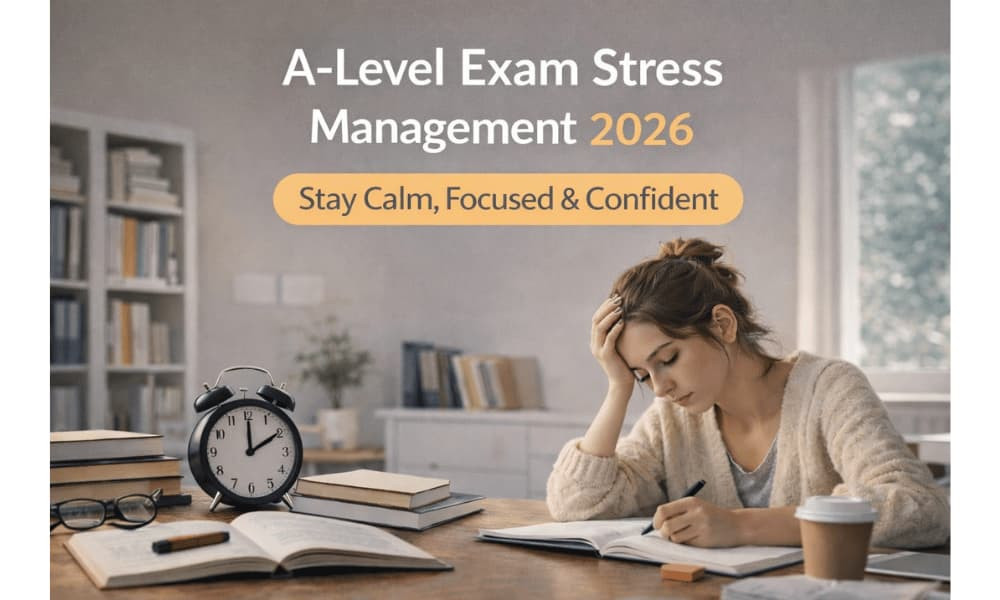
A-Level exams are one of the most important stages in a student’s academic journey. University offers, career choices, and future opportunities often depend on these results. Because of this pressure, feeling stressed before exams is completely normal.
However, when stress becomes overwhelming, it can affect concentration, memory, confidence, and motivation. Many capable students underperform not because they lack knowledge, but because anxiety prevents them from showing their true potential.
The good news is that exam stress can be managed.
With the right habits, mindset, and preparation, you can stay calm, focused, and confident during your A-Level exams in 2026. This guide explains how — in a practical and realistic way.
Most A-Level students feel stressed because they care deeply about their future. The fear of missing university offers, pressure from family, heavy coursework, and limited revision time slowly build emotional tension.
Many students also compare themselves with classmates, which increases self-doubt. Social media and constant discussion about grades often make this pressure even worse.
Over time, these worries can turn simple revision tasks into something that feels overwhelming.
A small amount of stress can be helpful because it keeps you motivated. But when stress becomes excessive, it starts to interfere with daily life.
You may be struggling with unhealthy exam stress if you often feel restless, have difficulty sleeping, feel tired all the time, lose motivation, or panic before revision sessions. Some students also experience headaches, low mood, or emotional exhaustion.
These signs do not mean you are weak. They simply mean your routine needs improvement.
One of the biggest causes of exam stress is uncertainty. When students do not know what to revise or where to start, the brain feels overloaded.
Instead of trying to study everything at once, focus on short-term planning. A weekly structure works much better than vague long-term goals.
Plan your subjects around your confirmed exam schedule. You should always check your dates on the official A-Level Exam Timetable 2026 UK.
When your revision is organised, your mind feels more in control and stress naturally decreases.
Past papers are one of the most powerful tools for managing exam stress. They turn fear into familiarity.
When you practise with real exam papers, you learn how questions are structured, how much time each section requires, and what examiners expect. This removes uncertainty, which is one of the main causes of anxiety.
The most effective method is:
Attempt → Mark → Fix → Re-attempt weak questions
For reliable practice papers, use:
https://meritstudyresources.co.uk/past-papers/a-levels/
Regular past paper practice makes real exams feel manageable instead of frightening.
Many students believe that studying for very long hours guarantees success. In reality, this often leads to exhaustion, poor concentration, and memory problems.
The brain learns best in short, focused sessions. When you push yourself for too long without breaks, productivity drops and stress increases.
A balanced study routine helps you stay consistent without damaging your mental health.
Quality always beats quantity.
Sleep plays a crucial role in learning and emotional control. During sleep, your brain processes and stores information that you studied during the day.
Students who sacrifice sleep for late-night revision often experience worse memory, lower focus, and higher anxiety.
To improve sleep during exam season, avoid heavy revision late at night, reduce phone use before bed, and maintain a regular sleep schedule. Even small improvements in sleep can dramatically reduce stress.
A rested mind performs better than a tired one.
The night before an exam should be calm, not stressful. This is not the time to learn new topics.
Focus on preparation instead.
Pack your pens, calculator, and identification. Confirm your exam time and location. Review short notes only if necessary. Eat light food and go to bed early.
A calm evening leads to a confident morning.
Private candidates often experience extra pressure because they study independently.
If you are a private candidate, make sure you understand your exam centre’s rules, result collection process, and communication system in advance. Keep all documents organised and ask questions early if anything is unclear.
If you need professional exam registration support, use an approved exam centre to avoid last-minute problems.
Sometimes stress is not caused by lack of effort, but by lack of guidance. Many students feel overwhelmed simply because they do not know whether they are revising correctly.
Working with experienced A-Level tutors who provide structured revision support can help reduce anxiety and build confidence.
Learn more about personalised A-Level support at:
https://merittutors.co.uk/
When students know they are on the right path, stress naturally decreases.
All A-Level exams in the UK follow national regulations set by the Joint Council for Qualifications (JCQ), which oversees exam security, fairness, and standards.
Following official rules protects your results and ensures fair assessment.
Is A-Level exam stress normal?
Yes. Almost all students experience stress before exams. It becomes harmful only when unmanaged.
Can stress affect exam performance?
Yes. High stress reduces memory and focus, but good routines can reverse this.
How can I calm myself before studying?
Start with a small task, take slow breaths, and focus on one topic at a time.
How many hours should I revise daily?
Most students perform best with 3–5 focused hours rather than long, unfocused sessions.
Should I get help if I feel overwhelmed?
If stress is stopping you from studying effectively, professional guidance can be very helpful.
A-Level exams are important, but they do not define your entire future.
Success comes from steady revision, smart practice, good sleep, and a balanced mindset. Students who manage stress well are more likely to perform at their true potential.
Stay organised. Trust your preparation. Take care of your health.
When you control stress, you control your performance.
Recent Posts
Categories
Tags