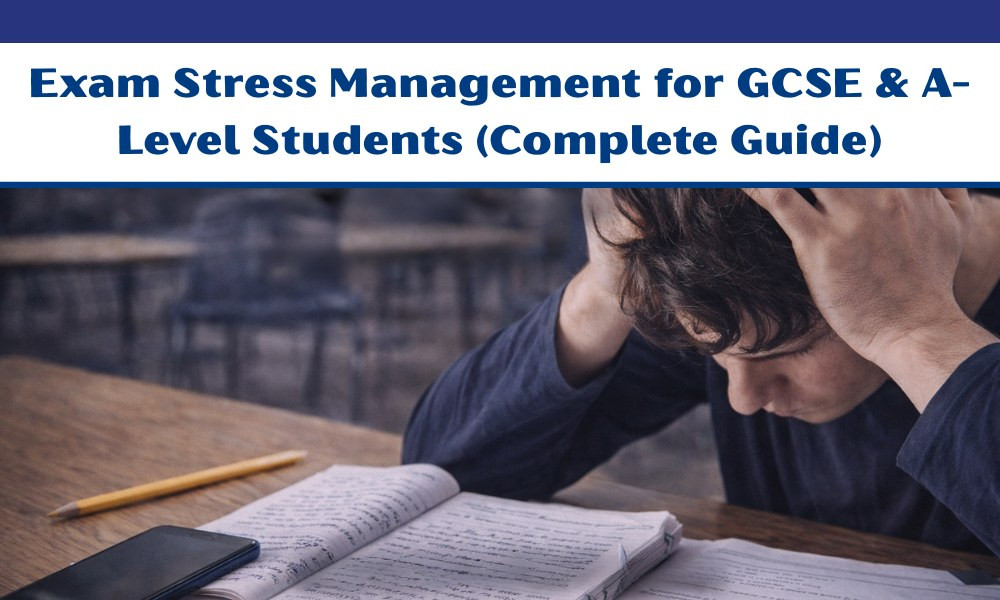
As GCSE and A-Level exams approach, stress becomes almost unavoidable. Even students who have revised consistently can begin to feel overwhelmed in the final weeks. Thoughts about results, expectations, and future plans can quickly turn into pressure.
What makes exam stress difficult is not just the workload, but the uncertainty that comes with it. Many students start to question whether they have done enough, whether they will remember everything, or whether they can perform under pressure.
However, stress is not always a negative thing. In small amounts, it can help you stay focused and motivated. The real challenge is managing it so that it does not affect your performance.
Understanding how to control exam stress is just as important as revision itself.
Exam stress usually builds gradually rather than appearing suddenly. It often comes from a combination of pressure, expectations, and lack of control.
Students may feel pressure from school, family, or even themselves. There is often a sense that these exams are “important for the future,” which increases anxiety.
Another key factor is uncertainty. Not knowing what questions will appear or how difficult the exam will be can create fear. This uncertainty leads to overthinking, which makes stress worse.
A lack of structure can also contribute. When revision feels unorganised or rushed, students feel like they are falling behind, even if they are not.
Recognising these causes helps you deal with stress more effectively.
One of the most effective ways to manage stress is through preparation.
When your revision is structured, your mind feels more in control. You know what you have covered and what still needs attention. This reduces uncertainty and builds confidence.
Preparation does not mean studying constantly. It means having a clear plan and following it consistently. Breaking your revision into manageable sections makes the process feel less overwhelming.
Using focused resources can also help keep your preparation effective.
The more organised your revision is, the less space there is for panic.
A consistent routine is one of the most overlooked tools for managing exam stress.
Students often fall into extremes. Some study for long hours without breaks, leading to burnout. Others avoid studying because they feel overwhelmed, which increases anxiety.
The key is balance. A routine that includes focused study sessions, regular breaks, and time to relax keeps your mind stable.
Sleep is especially important. Without enough rest, your brain struggles to retain information, stay focused, and think clearly. Even a well-prepared student can underperform if they are exhausted.
A balanced routine supports both your mental health and your exam performance.
The final days before exams are when stress tends to peak.
Many students try to revise everything at once, which often leads to confusion rather than clarity. Instead, this period should be about reinforcing what you already know.
Light revision, reviewing key topics, and practising exam techniques are far more effective than trying to learn new material.
Preparing your exam essentials the night before can also reduce stress significantly. Knowing that everything is ready allows you to focus on the exam itself.
You can follow this guide to stay organised: Items Banned in Exams.
These small steps help you feel more in control.
Even with preparation, it is normal to feel nervous when the exam begins.
The key is not to eliminate stress completely, but to manage it. Taking a moment to breathe, read the questions carefully, and plan your answers can help you stay focused.
If you feel stuck on a question, move on and return to it later. This prevents panic and helps you use your time effectively.
Confidence plays a major role here. Trust the work you have already done. You do not need to be perfect to perform well.
Many students unintentionally make their stress worse through certain habits.
Comparing yourself with others is one of the most common mistakes. Hearing what others have revised can make you feel unprepared, even if you are not.
Another mistake is relying on last-minute cramming. This often leads to confusion and reduces confidence.
Ignoring breaks is also a problem. Continuous studying without rest can reduce focus and increase fatigue.
Avoiding these habits can make a noticeable difference in how you feel and perform.
Confidence is built over time, but it can be strengthened in the final stages of preparation.
Instead of focusing on what you do not know, focus on what you have already covered. Remind yourself of the effort you have put in and the progress you have made.
Practising past papers and reviewing your answers can also improve confidence. It shows you that you are capable of answering exam questions effectively.
A confident mindset helps you approach the exam with clarity rather than fear.
Is exam stress normal for GCSE and A-Level students?
Yes, exam stress is completely normal and experienced by most students before exams.
How can I reduce stress quickly before an exam?
Simple techniques like deep breathing, staying calm, and focusing on what you know can help reduce stress quickly.
Does stress affect exam performance?
Yes, too much stress can reduce concentration and memory, which can negatively affect performance.
How important is sleep during exam season?
Sleep is extremely important because it helps your brain process information and stay focused.
Can a revision plan really reduce stress?
Yes, having a clear and structured revision plan helps you feel more in control and reduces anxiety.
Exam stress is a normal part of the GCSE and A-Level experience, but it does not have to control you.
By staying organised, maintaining a balanced routine, and focusing on preparation, you can manage stress effectively. The goal is not to remove stress completely, but to keep it at a level where it helps rather than harms.
In the end, success is not just about how much you revise, but how well you manage yourself during the process.
Stay calm, trust your preparation, and give yourself the best chance to perform at your best.
Recent Posts
Categories
Tags



 Updated 16-April-2026