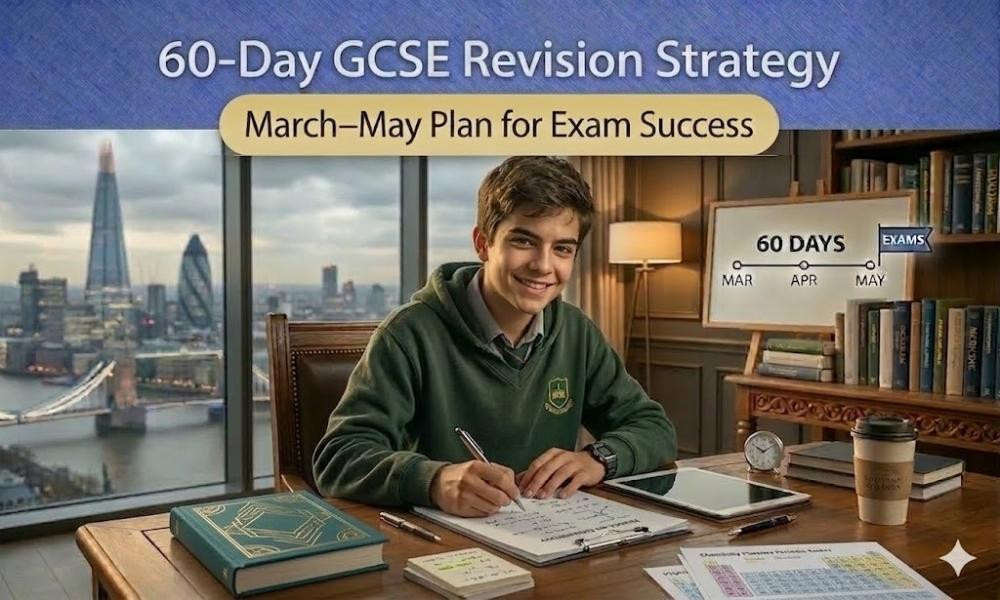
As we move through March, GCSE students are entering the final and most critical stage before exams begin in May. With roughly 60 days remaining, this is the time to focus on smart, structured revision rather than trying to cover everything at once.
At this stage, success is not about how much time you spend studying, but how effectively you use the time you have. A clear 60-day plan can help you stay organised, reduce stress, and improve your performance in the final exams.
This guide outlines a practical and realistic revision strategy designed specifically for the last two months before GCSE exams.
The final 60 days before GCSE exams can be divided into two key phases. Each phase has a specific focus that helps students transition from revision to exam readiness.
The first phase, covering the next 30 days, should focus on strengthening subject knowledge and identifying weak areas. The second phase, leading directly into the exam period, should focus on practising past papers, improving exam technique, and building confidence.
This approach ensures that students are not only prepared but also comfortable with the exam format and timing.
During the first half of this period, the main goal is to consolidate your understanding of key topics. By now, you should already be familiar with most of the syllabus, so this phase is about improving weak areas rather than learning everything from scratch.
Start by reviewing your mock exam results or recent class tests. These can help you identify which subjects or topics need the most attention. Once you know your priorities, create a simple weekly revision plan that rotates subjects and ensures consistent coverage.
Revision during this phase should focus on active learning. Instead of just reading notes, try summarising topics in your own words, using flashcards, and practising short exam-style questions. This helps improve understanding and retention.
Consistency is more important than intensity. Even a few focused hours each day can lead to significant progress over time.
As you move closer to the exam period, your focus should shift towards applying your knowledge through practice. This is where past papers become essential.
Completing full exam papers under timed conditions helps you understand how questions are structured and how to manage your time effectively. It also builds confidence, which is crucial during exams.
After each paper, take time to review your answers carefully. Identify mistakes, understand why they happened, and revise those specific topics again. This process of practice and correction is one of the fastest ways to improve.
During this phase, try to simulate real exam conditions as much as possible. Sit in a quiet environment, avoid distractions, and stick to the official time limits.
A structured daily routine can make your revision more effective and less stressful. You do not need to study all day, but you should aim for consistent, focused sessions.
A typical day might include a few study blocks, each dedicated to a different subject, with short breaks in between. This helps maintain concentration and prevents fatigue.
It is also important to include time for rest and relaxation. Overworking can reduce productivity and lead to burnout, so balance is key.
Past papers are one of the most powerful tools for GCSE revision, especially in the final weeks. However, simply completing them is not enough.
To get the most benefit, you should:
Practise under timed conditions
Review every mistake carefully
Focus on weak areas
Repeat questions you struggled with
This approach helps you improve both your knowledge and your exam technique.
It is normal to feel pressure as exams approach, but managing stress is essential for performing well. Too much stress can affect concentration, memory, and confidence.
Make sure you are getting enough sleep, eating properly, and taking short breaks during study sessions. Even small habits, such as going for a walk or stepping away from your desk, can help refresh your mind.
If you feel overwhelmed, try to focus on one task at a time rather than thinking about everything at once. Progress, even in small steps, builds confidence.
Motivation can be challenging during the final weeks, especially when revision feels repetitive. Setting small goals can help keep you focused and give you a sense of achievement.
For example, completing a past paper or mastering a difficult topic can be a meaningful milestone. Tracking your progress also helps you see how far you have come.
Remember that these final 60 days are temporary, but the results can have a lasting impact on your future.
The last 60 days before GCSE exams are a crucial opportunity to improve your performance and build confidence. With a clear plan, consistent effort, and the right mindset, you can make significant progress in a short period of time.
Rather than trying to do everything, focus on doing the right things well. Strengthen your weak areas, practise regularly, and maintain a balanced routine.
With the right approach, you can enter your exams feeling prepared, confident, and ready to achieve your best results.
Is 60 days enough to prepare for GCSE exams?
Yes. With a structured revision plan and consistent effort, 60 days is enough time to significantly improve your performance.
How many hours should I revise daily?
Most students benefit from 3–5 hours of focused revision per day, depending on their subjects and schedule.
Should I focus more on weak subjects?
Yes, but you should still revise all subjects regularly to maintain balance.
Are past papers important in the final weeks?
Yes. Past papers are one of the most effective ways to prepare for GCSE exams, especially in the final month.
Recent Posts
Categories
Tags



 Updated 17-March-2026