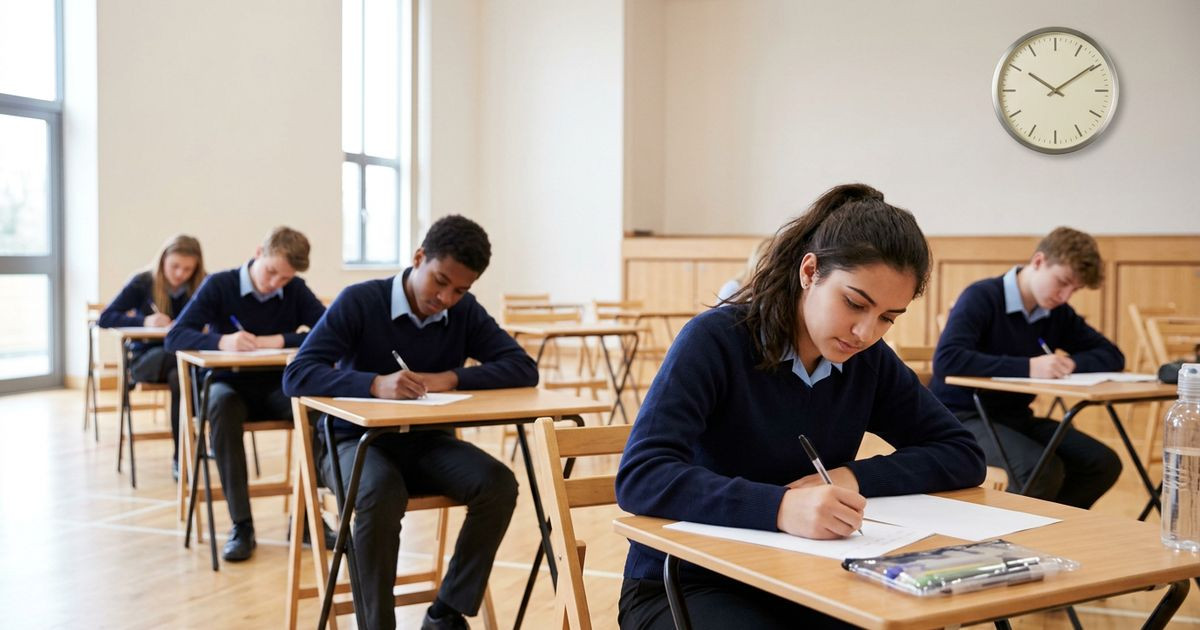
Every Year 8 pupil in England's state schools will sit a statutory reading test, checking how fluently they read and how well they understand what they read. It will be the first national test in Key Stage 3 since SATs for 14 year olds were dropped in 2008. There will be no national maths or writing test, but schools will be expected to assess both during Year 8 using assessments they choose.
The reading test is planned to be in place by 2029. Its exact start date and format are still being worked out.
At the moment, children's reading is measured nationally at the end of Year 6 and then not again until GCSEs. For a pupil who left primary school reading slowly, those three years can be costly. Secondary lessons lean heavily on reading: a history source, a science explanation, a maths word problem. A child who has to work hard to decode each sentence has less attention left for the ideas.
The government's own figures suggest around one in four children leave primary school without being able to read well enough. The Curriculum and Assessment Review recommended diagnostic checks halfway through Key Stage 3, early enough for schools to act before GCSE courses start. The government took that forward for reading, announcing the test in October 2025 and confirming it again in its February 2026 schools white paper.
|
Feature |
What we know |
|---|---|
|
Who sits it |
All pupils in Year 8 in state-funded schools in England |
|
What it checks |
Reading fluency and comprehension |
|
Status |
Statutory, so schools must run it |
|
Results for families |
Schools will make each child's results available to parents |
|
Published results |
National figures only, with no school-by-school league table |
|
Revision |
The government says pupils should not need to revise |
The Department for Education's announcement of the Year 8 reading test sets out the original plans.
The Standards and Testing Agency is developing the test, and several important details were still open in mid-2026. Ministers had hoped to begin in the 2028 to 2029 school year, which would make today's Year 6 the first cohort, but that has not been confirmed. Nobody yet knows whether the test will be taken on paper or on screen, or whether part of it might involve a teacher listening to a pupil read aloud. Its length and timing in the year have not been published either.
The review had suggested national tests in maths and English. The government chose a lighter approach for maths and writing: schools will be expected to check progress in Year 8 with good-quality assessments of their own choosing. Many secondary schools already run end-of-year tests in Years 7 and 8, so for most families this will feel like a firmer version of what already happens.
The government has been clear that the reading test is not designed to judge schools, and a school's results will not trigger an early Ofsted inspection. What schools do with individual pupils' results is less settled. Most will use them to target reading support, and some may use them alongside other information when planning groups. Once the details are confirmed, ask your child's school how it intends to use them.
The advice not to revise is sound. A test of reading fluency measures a habit built over years, and cramming for it would make little difference.
What does help is reading most days, with a mix of fiction, non-fiction and good journalism. Listening to your child read aloud now and then is revealing: if they stumble over longer words, skip lines or read in a flat monotone, fluency is still developing. Talking about what they have read builds comprehension, especially questions with no single right answer, such as why a character made a choice or what the writer wanted readers to feel. And when an unfamiliar word comes up, a quick conversation about what it means and where else it might appear does more for vocabulary than a list.
If your child avoids reading, reads noticeably slowly, or struggles to explain what a passage was about, those are signs worth acting on early. They tend to become harder to fix once GCSE courses are under way.
Our KS3 tuition covers reading, writing, grammar and core maths, and for younger children our KS2 English tuition works on reading fluency before the move to secondary school. A free assessment is a good starting point if you are unsure where your child stands.
No start date has been confirmed. Ministers hoped to begin in the 2028 to 2029 school year, and the test is planned to be in place by 2029.
Not a national one. Schools will be expected to assess maths and writing in Year 8 using assessments they choose.
There is no pass mark. The test is there to show how well each pupil reads so that those who need help can get it.
Recent Posts
Categories
Tags



 Updated 17-October-2026