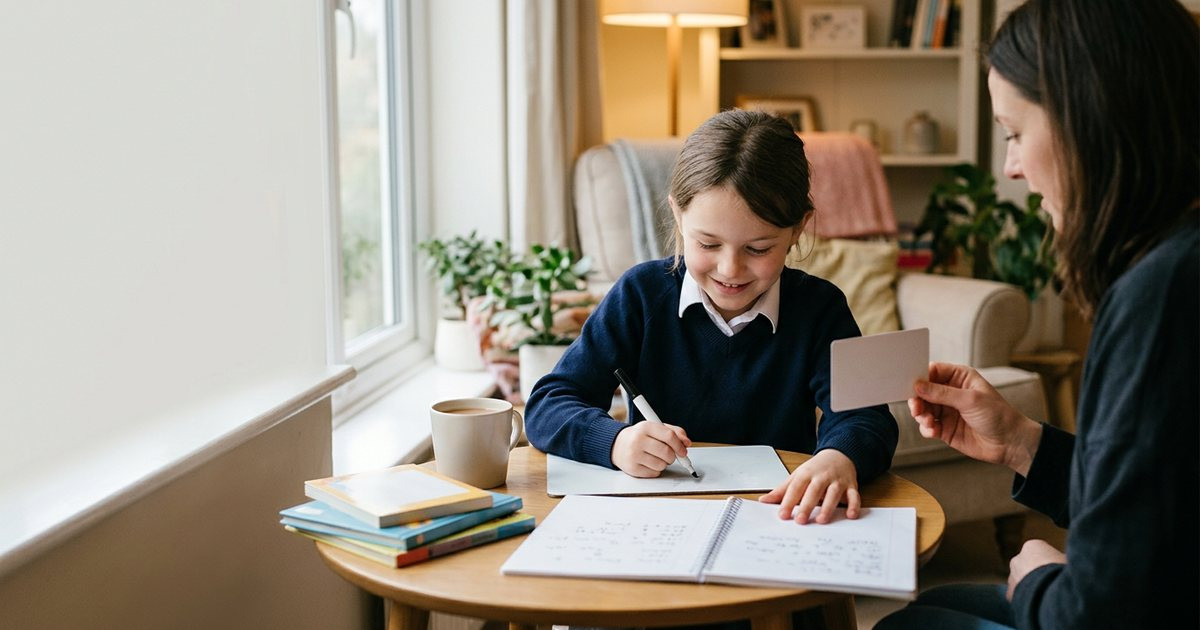
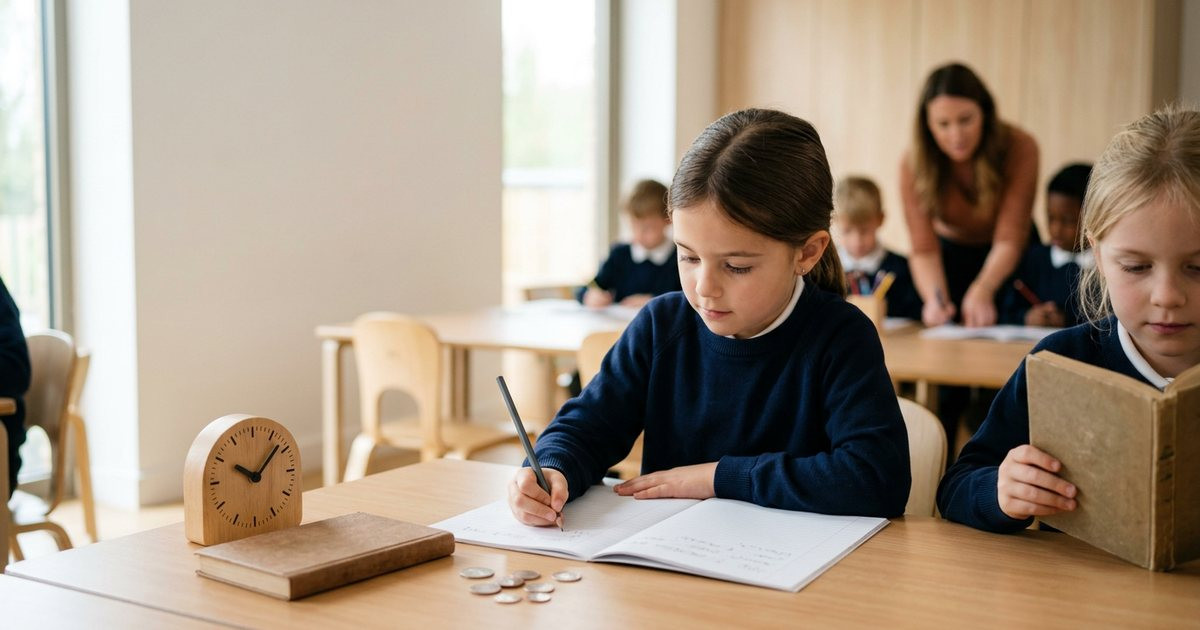
To improve a child's handwriting, start with the basics that sit underneath it: comfortable posture, a good pencil grip and correct letter formation. Then build up to joining and speed with short, regular practice. Five to ten minutes a few times a week works better than long sessions, and fixing how letters are formed matters more than making them look neat.
It also helps to know what your child's school expects at their age, so that you are practising the same things, in the same style.
Children still write by hand for most of primary school and for nearly all GCSE exams. When handwriting is slow or effortful, children have less attention left for ideas, spelling and punctuation. Improving handwriting often improves the quality of written work as a whole.
The national curriculum sets out a clear progression.
|
Year group |
Expectation |
|---|---|
|
Year 1 |
Sit correctly, hold a pencil comfortably, form lower-case letters starting in the right place, and form capital letters and digits 0 to 9 |
|
Year 2 |
Size letters correctly in relation to one another and start using the strokes needed to join letters |
|
Years 3 and 4 |
Use joined handwriting in independent writing, and improve legibility, consistency and quality |
|
Years 5 and 6 |
Write legibly, fluently and with increasing speed, choosing which letters to join |
You can read the full requirements in the national curriculum for English on GOV.UK.
Schools follow their own handwriting scheme, so ask your child's teacher which letter style they use. Practising a different style at home can confuse children.
Good handwriting starts before the pencil touches the paper.
feet flat on the floor or on a footrest
back supported and upright
table at about elbow height
the non-writing hand holding the paper steady
paper tilted slightly, towards the left for right-handers and towards the right for left-handers
Most children write most comfortably with a tripod grip. The pencil rests against the middle finger and is held between the thumb and index finger, with the fingers about a centimetre or two from the tip.
If your child grips with their whole fist, wraps their thumb over their fingers, or presses so hard that their hand aches, try:
shorter pencils or triangular pencils, which naturally encourage a better grip
a soft pencil grip from a stationery shop
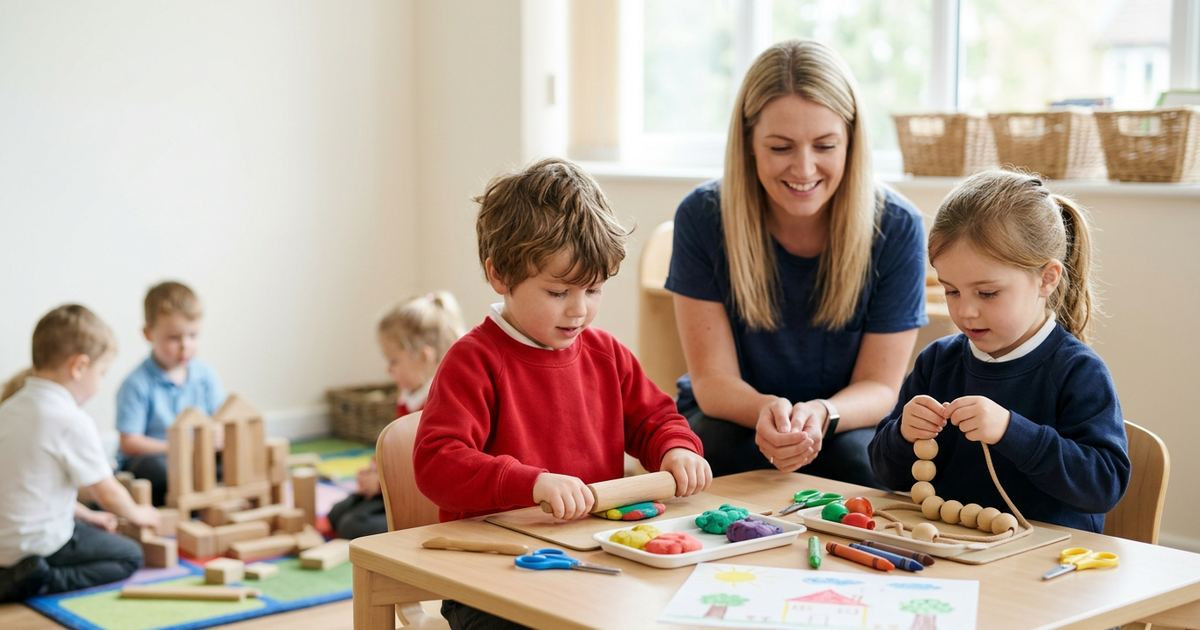
activities that strengthen fingers, such as play dough, pegs, tongs and tearing paper
How a letter is formed matters more than how it looks. Letters started in the wrong place, or formed in the wrong direction, become very hard to join later.
Many schools teach letters in groups that share the same movement, such as:
letters that start with a curve, like c, a, d, o, g and q
letters with a long downstroke, like l, t and i
letters that go down and back up, like r, n, m, h and b
Ask your child to say where each letter starts as they write it. Watch them form letters, not just the finished result.
|
Problem |
Likely cause |
What helps |
|---|---|---|
|
Letters different sizes |
Unclear sense of where letters sit |
Lined paper with a middle line, or highlighted bands showing letter height |
|
Reversed b and d |
Mixed-up starting points |
Practise b and d separately, linking each to a clear starting movement |
|
Words squashed together |
Spacing not yet automatic |
Use a finger or lolly stick as a spacer between words |
|
Very slow writing |
Grip, posture or formation not secure |
Fix the basics first, then short timed copying |
|
Aching hand |
Too much pressure or a tight grip |
Hand-strengthening play and a softer pencil |
|
Joins look forced |
Joining taught before letters are secure |
Go back to correct letter formation before joining |
Children usually begin learning joins in Year 2 and use joined writing in independent work from Year 3. Joining helps writing become faster and more fluent once letters are formed correctly.
Practise joins in pairs of letters first, then common letter strings such as "ing", "th" and "ed", and finally whole words. Keep it short and accurate.
Handwriting improves through regular, focused practice.
Warm up with a minute of hand and finger exercises.
Practise one letter, join or letter family for two or three minutes.
Copy a short sentence carefully, using what you have just practised.
Praise one specific thing, such as "Your tall letters are much clearer today."
Writing for real reasons, such as cards, labels, lists and diary entries, keeps practice purposeful.
sit them on the left of any right-handed sibling, so elbows do not clash
tilt the paper to the right
encourage them to hold the pencil a little further from the tip, so they can see what they are writing
choose pens that dry quickly to avoid smudging
Talk to your child's teacher if handwriting remains very difficult despite regular practice. This matters most if your child also finds other fine motor tasks hard, such as using cutlery or doing up buttons. The school can suggest support and, if needed, refer your child for a professional assessment.
Handwriting is part of both our KS1 English tuition and our KS2 English tuition, where tutors can watch how a child forms letters as well as what the finished page looks like.
Most children start learning joins in Year 2, aged six to seven, and use joined handwriting in independent work from Year 3.
Most schools use pencils in Key Stage 1 and introduce pens later in Key Stage 2. Follow your child's school.
Yes. Older children can improve legibility and speed with focused practice, especially when grip and letter formation are corrected first.
Recent Posts
Categories
Tags



 Updated 04-November-2026