Updated 17-September-2026
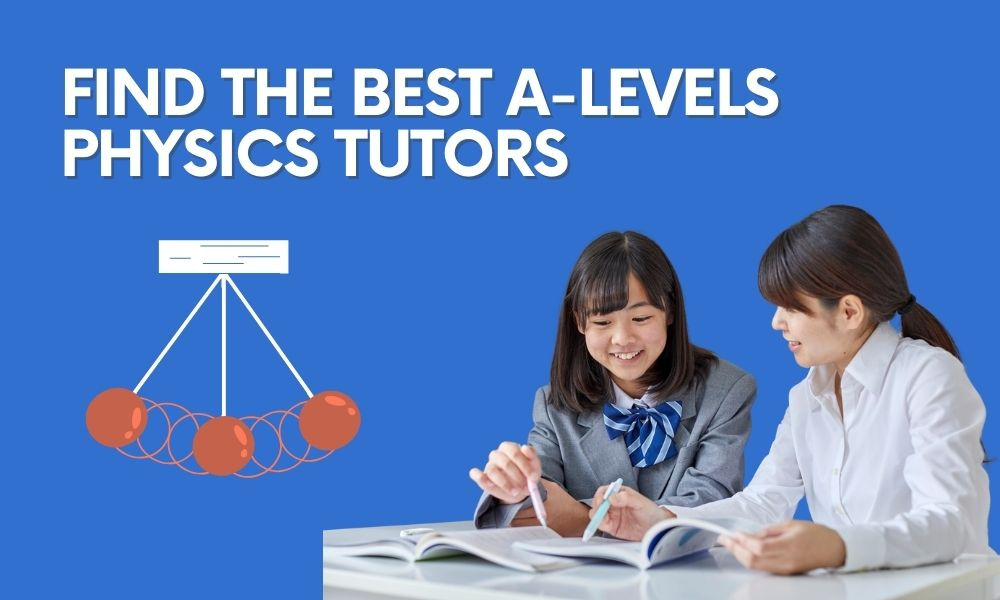
A-level Physics has two things working against students that other subjects don't: it leans heavily on maths fluency rather than recall alone, and it carries a separate practical assessment that runs alongside the written exams. Both of those change what "a good Physics tutor" actually looks like, so this guide focuses on the criteria specific to the subject rather than generic tutoring advice.
More than any other A-level science, Physics depends on being comfortable manipulating equations, working through multi-step calculations, and interpreting graphs under exam pressure. A tutor who is strong on physics concepts but rusty on the maths underneath them will struggle to help with the calculation-heavy questions that carry a large share of the marks. When you're assessing a tutor, it's worth asking directly how much of their session time goes on the maths mechanics (rearranging equations, unit conversions, uncertainty calculations) versus the conceptual physics, since a good tutor treats both as inseparable rather than teaching them in isolation.
This is also why pairing Physics tuition with solid A-level Maths support tends to help more than treating the two subjects as unconnected, particularly for students who are strong conceptually but lose marks on the algebra.
A-level Physics includes 12 required practical activities that students complete in school, assessed by their own teacher against the Common Practical Assessment Criteria (CPAC): following written procedures, using instruments safely and competently, recording observations accurately, and reporting results. According to AQA's official specification, this endorsement is pass or fail, doesn't count toward the final A-level grade, and is reported separately on the certificate.
Because it's assessed in school on practical work the student actually carries out, a tutor cannot complete or directly assess the endorsement for a student, and any provider implying otherwise is worth questioning. Where a good tutor does add real value is in the exam questions built around those same required practicals, since written papers regularly test the underlying physics, apparatus and error analysis from practical work even though the endorsement itself sits outside the written grade.
AQA, Edexcel, OCR and WJEC/Eduqas each structure their A-level Physics papers differently, with variation in optional topics, the number of papers, and how heavily data analysis and extended-response questions are weighted. Before starting with a tutor, confirm they're teaching to your child's specific exam board and have current past papers and mark schemes for it, rather than a generic physics curriculum that happens to cover similar topics.
AQA's own examiner report for A-level Physics Paper 2 is specific about where students lose marks, and the pattern is instructive for what a tutor should actually be drilling. Common errors included converting temperature differences by adding 273, when a temperature change is identical in Celsius and Kelvin and needs no conversion; stopping partway through multi-step problems, such as calculating the energy to heat water to 100°C but forgetting the separate energy needed to convert it to steam; power-of-ten errors when handling very large or very small numbers; and adding vector quantities directly instead of combining them in quadrature. The report also flagged answers given to an inappropriate number of significant figures, and marks lost through vague qualitative language, such as describing where charge "surrounds" a sphere without stating the location precisely. None of these are conceptual gaps in the traditional sense; they are exam-technique habits, which is exactly the kind of thing worth asking a prospective tutor how they actually drill, rather than assuming general "physics knowledge" covers it.
A short set of direct questions works better than a general "are you good at Physics" conversation:
Which exam board specifications have you taught, and do you have recent past papers for ours?
How do you split session time between maths mechanics and physics concepts?
Can you talk through how you'd approach a multi-step calculation question, step by step?
Do you track progress against specific topics (mechanics, waves, fields, particle physics) or just overall session time?
What happens if my child is preparing for a specific university course requirement, do you factor that into the plan?
If a student is aiming for an engineering, physics or other STEM degree, entry requirements for Physics and Maths vary by university and course, so it's worth checking the specific requirements on UCAS directly rather than assuming a standard requirement applies everywhere.
Merit Tutors' A-level tuition programme and A-level Physics revision courses are taught by exam-board-aligned tutors in small groups, with maths mechanics built into physics sessions rather than treated separately. A free assessment is the fastest way to see where a student currently stands against their specific exam board before committing to a full programme.
Does a Physics tutor need to be strong at maths specifically, not just physics?
Yes. A-level Physics is heavily calculation-based, and a tutor who is conceptually strong but rusty on the underlying algebra, unit conversions and uncertainty calculations will struggle with the questions that carry the largest share of marks.
Can a tutor help with the 12 required practicals?
Not directly. The practical endorsement is assessed in school by the student's own teacher on work the student physically carries out, so it is pass or fail and separate from the tutor's role. A tutor can still help with the written exam questions built around those same practicals, since papers regularly test the physics and error analysis behind them.
What actually causes students to lose marks who otherwise understand the physics?
AQA's own examiner reports point to exam-technique habits rather than knowledge gaps: incomplete multi-step answers, power-of-ten slips, incorrect vector addition, imprecise significant figures, and vague qualitative wording. A tutor who drills these specifically, not just physics concepts in general, tends to close more of the gap between understanding and marks.
Does the exam board matter if the underlying physics topics are the same?
Yes. AQA, Edexcel, OCR and WJEC/Eduqas structure their papers differently, with variation in optional topics, paper count and how heavily data analysis is weighted, so confirm a tutor is teaching to the specific board and has current past papers for it.
Sources Referenced for Factual Accuracy
Recent Posts
Categories
Tags