Updated 14-September-2026
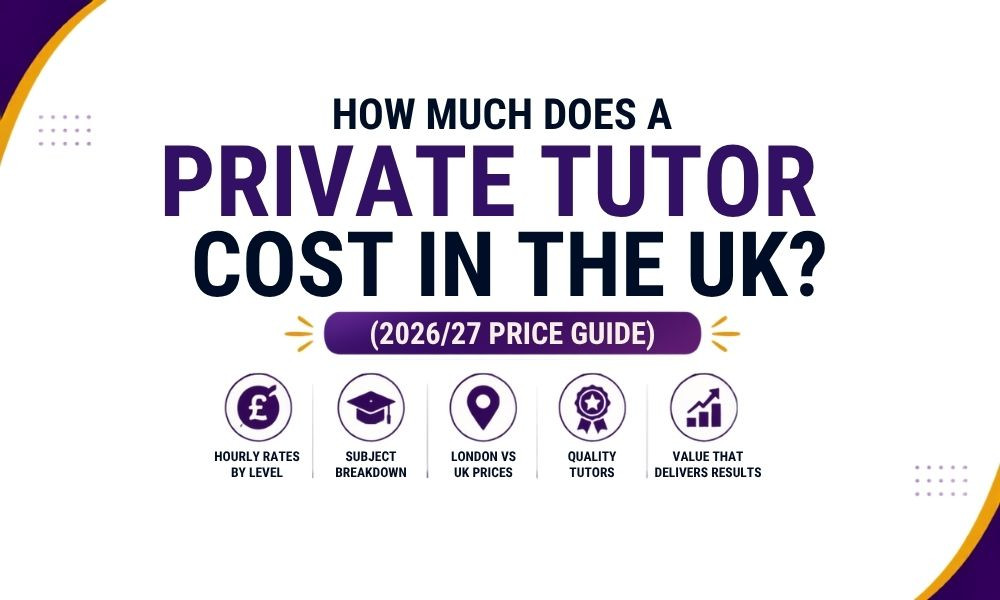
If you're budgeting for a tutor, here's the short answer: most private tutors in the UK charge between £25 and £45 per hour, depending on the level, subject, and where you live. Primary tuition sits at the lower end, GCSE in the middle, and A-Level at the top — with London rates typically £5–£15 above the rest of the country.
That's the headline. But the hourly rate is only half the story — the real question is what you get for it, and how to avoid paying premium prices for average teaching. As a tuition centre working with families across East London every day, we'll break down exactly what drives tutoring prices, where the hidden costs are, and how to get genuinely good value.
In this guide:
A private tutor in the UK typically costs £25–£45 per hour. Primary and KS2 tuition averages £25–£30 per hour, GCSE tuition £30–£40, and A-Level tuition £35–£45. Highly experienced tutors, exam specialists, and tutors in London often charge £50 or more per hour.
| Level | Typical hourly rate (UK) | Typical hourly rate (London) |
|---|---|---|
| Primary / KS1–KS2 | £20–£30 | £25–£40 |
| 11 Plus preparation | £30–£45 | £35–£55 |
| GCSE | £25–£40 | £30–£50 |
| A-Level | £30–£45 | £35–£55 |
| University / degree level | £40–£60+ | £45–£70+ |
Rates are typical market ranges as of the 2026/27 academic year. Individual tutors and centres set their own prices.
A pattern we see constantly: parents assume the hourly rate is the whole cost. It isn't. What matters is the total cost to reach the goal — a £45/hour specialist who gets your child exam-ready in 15 sessions is cheaper than a £25/hour generalist who takes 40. Keep that in mind through the rest of this guide.
Five factors drive almost every tutoring price in the UK: the academic level, the subject, the tutor's experience and results, your location, and the format (one-to-one at home, online, or at a tuition centre). Understanding these lets you work out whether a quote is fair — or inflated.
Maths and science tutors typically cost slightly more than humanities tutors at the same level. For GCSE, expect around £30–£40 per hour for maths, physics or chemistry, and £25–£35 for English and humanities. Language tutors vary the most, depending on whether they are native speakers and exam specialists.
| Subject (GCSE level) | Typical hourly range |
|---|---|
| Maths | £30–£40 |
| Physics / Chemistry / Biology | £30–£40 |
| English Language & Literature | £25–£35 |
| History / Geography | £25–£35 |
| Modern languages | £25–£40 |
Why the maths premium? Simple supply and demand: every Year 11 needs GCSE maths, resit demand is constant, and there are fewer confident maths tutors than English tutors. If you only budget for one subject, most tutoring centres — ours included — will tell you maths tuition delivers the biggest grade-for-money impact. For where to start, see our top 10 GCSE maths revision tips.
London is the most expensive place in the UK to hire a private tutor, with rates £5–£15 per hour above the national average. Within London, tutoring in outer boroughs like Newham or Redbridge typically costs less than in central and West London, while online tutoring smooths out most regional differences.
That East London price advantage is real — a GCSE maths tutor charging £60/hour in Kensington and one charging £35/hour in East Ham can hold identical qualifications. You are partly paying for postcode, not pedagogy. Here's what to look for in high-quality GCSE tuition in East London.
Online tutoring is usually £5–£10 per hour cheaper than the same tutor in person, because there's no travel time and tutors can work from anywhere. For self-motivated students it can be outstanding value; for students who struggle to focus, the saving is often false economy.
Our honest take after running both formats: online works brilliantly for A-Level students and focused GCSE students, but younger children (KS1–KS3) usually get more from being physically in the room with a tutor. If you're choosing between formats on price alone, factor in how your child actually learns — our full comparison of online vs on-site tutoring goes deeper.
Small-group tuition at a centre typically costs 40–60% less per hour than private one-to-one tutoring, because the cost is shared across 3–6 students. For most students below A-Level, a well-run small group with a structured curriculum delivers comparable progress to one-to-one at roughly half the price.
This is the option many parents don't know exists. One-to-one is the right call for targeted gap-fixing, exam resits on a deadline, or students who need confidence-building. But for steady, term-long progress, small groups are how families on a normal budget afford weekly expert tuition. We've written more on why small group tutoring works and when one-to-one is worth it.
Private tutoring is worth the cost when it has a specific job to do: closing a grade gap, preparing for the 11 Plus or GCSEs, or rebuilding confidence after a bad year. It is least worth it when it's bought as general "extra help" with no target, no timeline, and no way to measure progress.
Before you spend a penny, define what success looks like — "from a grade 4 to a 6 in GCSE maths by March" beats "help with maths". A good tutor or centre should assess your child first, tell you honestly what's achievable, and report progress regularly. If they won't do those three things, keep your money. Our guide on how to choose a tuition centre covers the full vetting process.
When to book matters too. Every September and January, we watch demand spike and the best tutors' diaries fill within weeks. Families who start tuition in October–November — before the mock-exam panic — consistently get more choice and more improvement time than those who call in February.
At Merit Tutors, our East London tuition centre offers structured small-group and one-to-one tuition from KS1 through A-Level, starting with a free assessment so you know exactly where your child stands before you spend anything.
Most UK tutors charge £25–£45 per hour. Primary tuition sits around £20–£30, GCSE around £25–£40, and A-Level around £30–£45, with London typically £5–£15 higher at every level.
Typically £30–£40 per hour across most of the UK, and £30–£50 in London. Maths tutors charge slightly more than average because demand — especially for resits — consistently outstrips supply.
Not automatically. Price reflects experience, location, and format as much as quality. A £25/hour tutor in a small-group setting with a structured curriculum can outperform a £50/hour generalist. Judge tutors on assessment, exam-board knowledge, and measurable results — not the rate alone.
At that price you're usually looking at university students or group classes. A bright undergraduate can be great for younger children; for GCSE and A-Level exam preparation, experience with the actual exam boards matters more.
For most students, one focused hour per subject per week — sustained over a term or more — beats cramming multiple hours weekly. Exam resits or big grade gaps may justify two.
Usually £10 - £15 per hour cheaper. It suits motivated older students well; younger children often do better face-to-face.
Recent Posts
Categories
Tags